
When you hurt your wife, the right words can’t erase the pain—but they can open the door to healing.
This guide gives you emotional apology letters you can copy, edit, and personalize without sounding fake or defensive.
Use these letters to take responsibility, validate her feelings, and show real change with actions.
Check out here for more: 250+ Catchy 50th Birthday Slogans That Steal the Spotlight
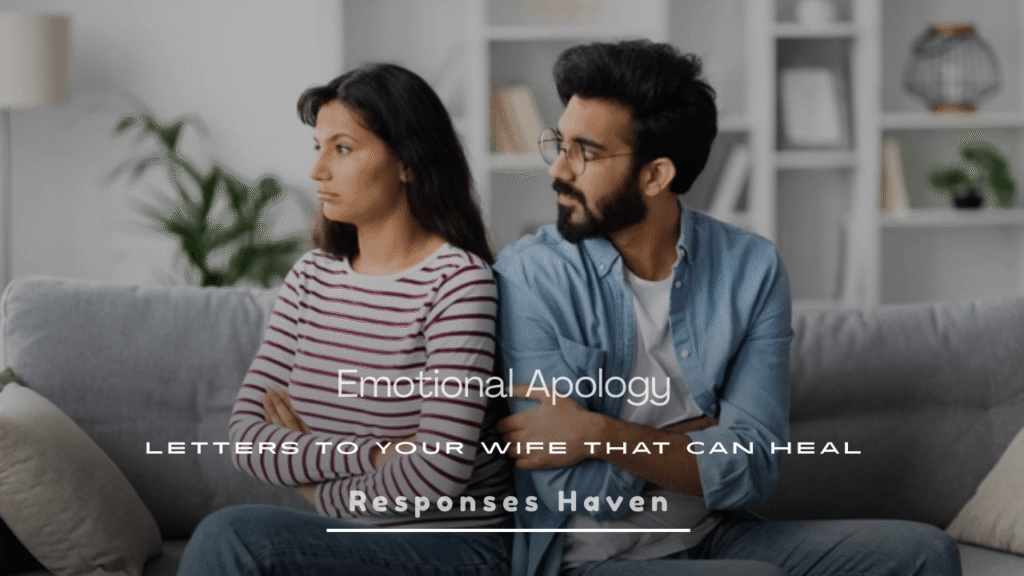
What Makes a Real Apology Letter to Your Wife?
Why “I’m Sorry” Alone Isn’t Enough
I’m sorry is a starting point, not a repair plan.
Your wife needs to feel understood, not just acknowledged.
A real apology explains what you regret without making excuses.
It shows you recognize the emotional damage your words caused.
It proves you’re willing to change patterns, not just moments.
It offers safety, not pressure for immediate forgiveness.
It respects her pace instead of demanding closure.
It replaces defensiveness with empathy and humility.
It makes room for her feelings without debate.
It backs your apology with consistent follow-through.
The Difference Between Explaining vs Excusing
Explaining clarifies the moment without denying harm.
Excusing shifts responsibility away from you and onto circumstances.
Explaining sounds like “I reacted badly and I regret it.”
Excusing sounds like “I wouldn’t have done it if you didn’t…”
Explaining admits your choice and your behavior.
Excusing argues your wife should understand and move on quickly.
Explaining names the trigger without blaming the trigger.
Excusing turns your feelings into permission to hurt her.
Explaining is about accountability, not justification.
Excusing breaks trust because it predicts the same mistake again.
Taking Full Responsibility Without Defensiveness
Start by naming what you did in plain words.
Avoid softening language that minimizes the impact.
Say “I hurt you” instead of “You felt hurt.”
Own the behavior even if you didn’t mean it that way.
Remove “but” because it cancels the apology.
Apologize for the result, not only your intention.
Acknowledge the pattern if this has happened before.
Commit to a change she can actually see.
Invite her to share more without arguing back.
Respect that trust takes time to rebuild.
How to Validate Her Feelings the Right Way
Validation means you believe her experience is real.
Say you understand why it hurt, even if you felt stressed.
Use her language if she told you what she felt.
Reflect the emotion: sad, disrespected, ignored, embarrassed.
Confirm the impact: “That must have felt lonely.”
Avoid correcting her memory or tone.
Let her feelings exist without a courtroom conversation.
Ask what she needs to feel safe again.
Show you care about her pain more than being right.
End with reassurance that her feelings matter to you.
What to Avoid: Blame, “If,” and Backhanded Apologies
Avoid “I’m sorry if you felt…” because it denies reality.
Avoid “I’m sorry but…” because it becomes an argument.
Avoid listing what you’ve done right to balance the scales.
Avoid turning the apology into your own suffering story.
Avoid “You always” or “You never” statements.
Avoid demands like “Can we move on now?”
Avoid apologies that pressure her to comfort you.
Avoid sarcasm, jokes, or casual tone during repair.
Avoid rewriting the fight to prove your point.
Avoid repeating the same behavior after saying sorry.
The Best Apology Letter Structure That Actually Works
The 5-Part Apology Letter Template (Simple & Effective)
Start with a clear apology for what you did.
Name the specific action and the moment it happened.
Acknowledge how it affected her emotionally.
Offer repair with concrete steps and boundaries.
Close with respect, love, and patience for her timeline.
Keep the tone calm and adult, not dramatic.
Make it about her healing, not your image.
Use simple words that sound like you.
Stay consistent from first line to last line.
End without demanding forgiveness.
How to Name What You Did (Clearly, Without Overdoing It)
Use one or two sentences that describe your action.
Say what you said or what you failed to do.
Don’t hide behind “things got heated” language.
Don’t blame stress, work, family, or her reaction.
Avoid making it too long or overly detailed.
Focus on the exact behavior you regret.
Admit the choice you made in that moment.
Show awareness of why it crossed a line.
Use maturity instead of self-hate language.
Make the wrongdoing clear so the apology feels real.
How to Acknowledge the Impact on Her (Not Your Intent)
Intent doesn’t erase pain, so don’t lead with intent.
Talk about what she likely felt in that moment.
Use empathy words like hurt, dismissed, disrespected, unseen.
Acknowledge if you embarrassed her or broke her trust.
Say you understand why it changed her mood or distance.
Recognize that it may have reopened old wounds.
Confirm that her feelings make sense.
Make space for more feelings she hasn’t shared yet.
Avoid debating the “correct” interpretation of events.
Let the impact matter more than your defense.
How to Offer Repair and Change (Specific Actions)
Repair includes what you will do starting now.
Offer one to three actions you will practice consistently.
Examples: no yelling, no name-calling, no silent treatment.
Offer to listen without interrupting for a set time.
Offer to check in daily with calm communication.
Offer to seek counseling or anger management if needed.
Offer boundaries for conflict: pause, breathe, return respectfully.
Offer to rebuild trust through transparency and follow-through.
Ask her what repair looks like to her.
Promise consistency, not perfection.
How to Close the Letter With Love and Respect
End with love that doesn’t manipulate her emotions.
Say you will respect her space and her pace.
Tell her you’re committed to doing the work.
Thank her for reading and for being honest with you.
Offer a gentle invitation to talk when she’s ready.
Avoid dramatic “I can’t live without you” lines.
Avoid guilt-driven closings that pressure her.
Use a calm sign-off that matches your relationship.
Reassure her she’s safe to express herself.
Close with dignity, not desperation.
Short Apology Letters to Wife for Hurting Her Feelings
Short “I Hurt You” Apology Letter (Direct and Mature)
My love, I’m sorry for hurting you.
I crossed a line, and I own that completely.
You didn’t deserve my words or my attitude.
I understand why you feel upset and distant.
I regret the way I made you feel in that moment.
I’m not going to defend it or minimize it.
I want to repair this with patience and respect.
I will speak to you with kindness, even during conflict.
When you’re ready, I want to listen to you fully.
I love you, and I’m committed to doing better.
Short Apology Letter After Saying Something Mean
I’m sorry for what I said to you.
My words were sharp and unfair, and I regret them.
I understand they hurt you deeply.
I don’t want to be someone who speaks to you that way.
You deserve gentleness, especially from me.
I take responsibility without excuses.
I’m going to work on pausing before I speak.
I’m going to choose respect even when I’m stressed.
When you’re ready, I want to hear how it affected you.
I love you, and I’m sorry.
Short Apology Letter After Being Neglectful
I’m sorry I’ve been neglecting you.
I see how my absence made you feel alone.
You deserve attention, care, and emotional presence.
I’ve been taking your love for granted, and that’s on me.
I don’t want you to feel like you come last.
I’m going to show up consistently, not just occasionally.
I’m going to make time for us every day.
I’m going to ask how you’re doing and truly listen.
I want to reconnect and rebuild closeness.
Thank you for being patient with me, and I’m sorry.
Short Sorry Letter When You Disappointed Her
I’m sorry I let you down.
I understand you trusted me, and I didn’t show up the way I should have.
You had every right to expect better from me.
I’m not proud of the choice I made.
I regret the stress and sadness it caused you.
I’m taking responsibility without shifting blame.
I’m going to fix what I can and learn from what I can’t undo.
I want to regain your trust step by step.
When you’re ready, I want to talk and listen.
I love you, and I’m sorry for disappointing you.
Short Apology Note She Can Read Quickly Without Pressure
I’m sorry for hurting you today.
I know you’re upset, and I understand why.
I take full responsibility for my behavior.
I don’t want to argue or defend myself right now.
I just want you to feel heard and respected.
I’m here when you’re ready to talk.
I’ll give you space without disappearing.
I’ll show you change through consistent actions.
You matter to me more than my pride.
I love you and I’m sorry.
Emotional Apology Letters to Wife to Make Her Feel Heard
Deep Apology Letter Focused on Her Pain (Empathy-First)
My love, I’m writing because I hurt you, and I need to name it honestly.
I understand my words and behavior made you feel disrespected and unseen.
You deserved tenderness from me, and I gave you the opposite.
I can imagine how heavy it felt to be treated that way by your husband.
I’m sorry for the pain I caused, not only for the argument itself.
I’m sorry for what it did to your sense of safety with me.
I take full responsibility without excuses or explanations.
I want to listen to you fully and accept what you share.
I want to rebuild trust through real change, not promises.
I love you, and I’m committed to becoming a safer partner for you.
Apology Letter That Admits Regret Without Self-Pity
I’m sorry for hurting you, and I’m not going to make this about my guilt.
What matters most is the pain you’re carrying because of me.
I regret the moment I chose harshness instead of love.
I regret making you feel like your feelings didn’t matter.
You are my wife, and you deserve my respect in every moment.
I accept that you may need time before you feel close again.
I will not rush your healing or demand forgiveness.
I will prove change by how I speak and how I show up daily.
If you’re willing, I want to hear what you need from me now.
I love you, and I’m sorry for the hurt I caused.
Apology Letter That Reassures Her She Matters
My love, I’m sorry I made you feel small.
You are not too much, and your feelings are not a problem to manage.
You deserve patience, gentleness, and steady love from me.
I regret the way I acted and the distance it created between us.
I want you to know you matter to me deeply.
I want you to feel safe being honest with me.
I’m going to work on listening without reacting defensively.
I’m going to choose calm communication even when I’m upset.
I’m going to prioritize our connection, not just my comfort.
I love you, and I’m sorry for hurting you.
Apology Letter That Honors Your Marriage and History
I’m sorry for hurting you, especially after all we’ve built together.
Our marriage deserves care, respect, and protection from my worst moments.
You’ve stood by me through so much, and I failed you here.
I regret making you feel like your love is taken for granted.
I don’t want our story to be shaped by repeated pain.
I want it to be shaped by repair, growth, and mature love.
I’m taking responsibility for what I did and how it affected you.
I’m willing to do the work, even when it’s uncomfortable.
When you’re ready, I want to listen and make this right.
I love you, and I’m committed to our marriage.
Apology Letter That Offers Healing, Not Just Words
I’m sorry for hurting you, and I know words alone aren’t enough.
So I’m pairing this apology with actions you can rely on.
I will not raise my voice, insult you, or shut you out.
If a conversation gets heated, I will pause and return calmly.
I will listen without interrupting and without turning it into a debate.
I will ask what you need and follow through consistently.
I will check in with you daily instead of avoiding discomfort.
I will take accountability again if I slip, without excuses.
I will consider counseling if that helps us heal better.
I love you, and I’m committed to repairing what I damaged.
Apology Letter to Wife After a Fight or Argument
Apology Letter After a Heated Argument
I’m sorry for how I handled our argument.
I let emotion turn into disrespect, and that was wrong.
You deserved a calm partner, not a reactive one.
I regret the tone I used and the tension I created.
I know it likely made you feel unheard and unsafe.
I’m not proud of how I showed up in that moment.
I take responsibility without blaming you or the situation.
I want to talk again when we’re both calm and ready.
I want to listen first and understand your side fully.
I love you, and I’m sorry for hurting you during the fight.
Apology Letter for Raising Your Voice or Being Harsh
I’m sorry I raised my voice at you.
That was disrespectful, and it crossed a line.
You don’t deserve to be spoken to with anger or harshness.
I understand it may have felt intimidating or humiliating.
I regret making conflict feel unsafe between us.
I’m taking responsibility for my reaction and my tone.
I’m going to practice pausing before I speak when I’m upset.
I’m going to protect our marriage with calmer communication.
If you’re willing, I want to hear how it affected you.
I love you, and I’m sorry.
Apology Letter for Silent Treatment or Stonewalling
I’m sorry for shutting you out.
The silent treatment was unfair and emotionally hurtful.
I understand it made you feel alone and rejected.
You deserve communication, not punishment or distance.
I regret making you chase connection while I stayed closed off.
I take responsibility for avoiding instead of repairing.
I’m going to communicate my need for space in a healthier way.
I’m going to come back to conversations instead of disappearing.
When you’re ready, I want to talk and do it calmly.
I love you, and I’m sorry for how I handled it.
Apology Letter for Saying Hurtful Things in Anger
I’m sorry for what I said when I was angry.
I used words that were meant to win, not to love.
You didn’t deserve that cruelty from the person who vowed to protect you.
I understand it may have stayed in your mind long after the fight ended.
I regret making you question how I see you.
I take responsibility for the damage those words caused.
I’m going to work on conflict skills so anger doesn’t control me.
I’m going to speak with respect even when I disagree.
I want to repair trust and emotional safety between us.
I love you, and I’m sorry for the pain I caused.
Apology Letter When You Both Were Wrong (Without Splitting Blame)
I’m sorry for my part in what happened.
Even if we were both upset, my behavior is still my responsibility.
I regret the way I spoke and the way I escalated things.
You deserved better from me in that moment.
I’m not writing this to measure who was more wrong.
I’m writing because I care about you and our peace.
I want to listen to what hurt you without defending myself.
I want us to repair this with calmer communication.
When you’re ready, I want to talk and do it differently this time.
I love you, and I’m sorry for my part.
Apology Letters for Specific Situations
Apology Letter for Lying or Hiding Something
I’m sorry I lied to you and hid the truth.
I understand that dishonesty damages trust deeply.
You deserved transparency, not half-truths and confusion.
I regret making you question what’s real between us.
I take full responsibility for choosing the easy way out.
I understand you may feel betrayed, angry, or unsafe.
I want to rebuild trust through honesty and consistency.
I will answer your questions calmly and truthfully.
I will accept consequences without blaming you for your reaction.
I love you, and I’m sorry for breaking your trust.
Apology Letter for Breaking Trust (Non-Cheating)
I’m sorry for breaking your trust.
Even if it wasn’t cheating, it still hurt you deeply.
I understand trust is the foundation of emotional safety.
I regret making you feel uncertain about me.
I take responsibility for the choice that crossed your boundary.
I want to rebuild trust with transparency and changed behavior.
I will be consistent, not just convincing.
I will listen to your concerns without dismissing them.
I will give you time to feel secure again.
I love you, and I’m sorry for the damage I caused.
Apology Letter for Not Prioritizing Her or the Relationship
I’m sorry I haven’t been prioritizing you.
I see how it made you feel second place in my life.
You deserve to feel chosen, valued, and protected.
I regret letting routine and distractions replace connection.
I take responsibility for the distance that grew between us.
I want to rebuild closeness by showing up daily.
I will make time for us and treat it as non-negotiable.
I will check in emotionally, not just physically.
I will give you attention that feels real, not rushed.
I love you, and I’m sorry for making you feel unimportant.
Apology Letter for Not Supporting Her (Emotionally/Mentally)
I’m sorry I didn’t support you when you needed me.
I regret making you feel like you had to carry everything alone.
You deserved comfort, patience, and a steady partner.
I understand how disappointing and lonely that must have felt.
I take responsibility for being emotionally unavailable.
I want to learn how to show up better for you.
I will listen without trying to fix everything immediately.
I will ask what kind of support you need in the moment.
I will be present instead of distracted or dismissive.
I love you, and I’m sorry I wasn’t there the way you needed.
Apology Letter for Repeating the Same Mistake Again
I’m sorry I hurt you again in the same way.
I understand repeated pain is worse than a single mistake.
It tells you my apology didn’t lead to real change.
I take responsibility for the pattern, not just the moment.
I regret making you feel like you can’t trust my words.
I don’t want you to live in anxiety waiting for it to happen again.
I’m committing to specific changes you can measure over time.
I’m willing to get help so this doesn’t keep repeating.
I will accept accountability without becoming defensive.
I love you, and I’m sorry for repeating what I promised to stop.
Romantic Apology Letters to Wife (Soft, Loving, Not Manipulative)
Romantic Apology Letter With Gentle Reassurance
My love, I’m sorry for hurting you.
I hate that I brought pain into the space that should feel safest for you.
You deserve a husband who speaks with love, even under stress.
I regret the moment I chose ego over tenderness.
I want you to feel cherished, not challenged.
I want you to feel protected, not pressured.
I will do the work to become calmer and kinder.
I will listen with patience and respond with respect.
When you’re ready, I want to hold you and make peace.
I love you deeply, and I’m sorry.
Apology Letter That Reminds Her Why You Chose Her
I’m sorry for hurting you, and I want to say this clearly.
I chose you because you’re strong, loving, and deeply real.
You bring warmth to my life and steadiness to our home.
And I failed to honor that with my behavior.
You didn’t deserve my sharpness or my distance.
I regret making you feel unwanted or unseen.
I want to love you the way you deserve, not just the way I’m used to.
I’m going to show you respect in tone, words, and actions.
I’m committed to growing up in the areas where I’ve been weak.
I love you, and I’m sorry for the hurt I caused.
Apology Letter That Includes Appreciation (Without Love-Bombing)
I’m sorry for hurting you.
I appreciate you, and I haven’t shown it the way I should.
You do so much, and you carry so much with grace.
My behavior didn’t match the love and respect you deserve.
I regret making you feel like your efforts don’t matter.
I’m thankful for your patience, but I won’t take it for granted.
I will show appreciation through consistency, not grand speeches.
I will speak to you gently and treat you with care.
When you’re ready, I want to hear what you need from me.
I love you, and I’m sorry.
Apology Letter With a Promise to Rebuild (Realistic Promises)
I’m sorry for hurting you, and I want to rebuild what I damaged.
I’m not promising perfection, but I am promising effort and consistency.
I will handle conflict without insults, threats, or shutdowns.
I will listen without interrupting or flipping blame.
I will check in with you and stay emotionally present.
I will show change in small daily ways, not just big moments.
I will accept your boundaries while trust rebuilds.
I will be patient with your healing and your timeline.
I will prove love through reliability and respect.
I love you, and I’m sorry for the pain I caused.
Apology Letter With a Romantic Gesture Plan (Simple + Thoughtful)
I’m sorry for hurting you.
I want to repair this with words and with actions.
If you’re open to it, I’d like to plan a calm evening together.
No heavy conversations unless you want them.
Just space for comfort, kindness, and reconnection.
I want to do something small that shows I’m choosing you again.
A meal you love, a walk, a quiet night, or a simple date.
I’ll follow your lead and respect what you need.
I’m committed to rebuilding closeness gently, not forcefully.
I love you, and I’m sorry.
How to Rebuild Trust After Hurting Your Wife
Actions That Matter More Than Words (Consistency Checklist)
Speak respectfully even when you disagree.
Stop repeating the same apology without changing behavior.
Show up on time and follow through on promises.
Ask what she needs and actually do it consistently.
Choose calm conversations instead of heated reactions.
Own mistakes quickly instead of arguing about them.
Create safe conflict rules and practice them every time.
Offer transparency where trust was damaged.
Repair small moments daily, not only big fights.
Let your actions become the apology she can believe.
How to Give Her Space Without Abandoning the Repair
Space means you don’t pressure her to “be fine.”
It doesn’t mean you disappear emotionally.
Tell her you’ll give space and still remain available.
Check in gently without demanding a response.
Avoid repeated texts that ask for reassurance.
Do helpful things quietly without expecting praise.
Keep your tone warm and respectful in the home.
Stay consistent even if she stays guarded for a while.
Allow her emotions without labeling them as overreactions.
Let time and stability do the healing work.
What to Say If She Doesn’t Forgive You Immediately
Say you understand forgiveness takes time.
Say you respect her feelings and her pace.
Say you’re still committed to changing your behavior.
Say you won’t punish her for needing time.
Say you’re available when she’s ready to talk.
Avoid guilt lines like “I said sorry already.”
Avoid anger that she’s not moving on fast enough.
Accept that trust is earned, not requested.
Ask what would help her feel safe again.
Stay steady until your change becomes undeniable.
How to Communicate Without Triggering Another Fight
Lower your voice and slow your pace.
Use “I” statements instead of accusations.
Repeat back what you heard before responding.
Take breaks when emotions rise too high.
Avoid sarcasm, eye-rolling, and dismissive tone.
Focus on one topic instead of a long list of complaints.
Apologize quickly if your tone slips.
Ask if now is a good time to talk.
Choose understanding over winning.
End conversations with reassurance, not cold distance.
When to Consider Counseling and How to Suggest It Kindly
Counseling helps when patterns repeat and trust is damaged.
Suggest it as support, not as a threat or punishment.
Say you want tools to love her better.
Say you want a safer way to communicate together.
Offer to book it and handle the logistics.
Let her choose the pace and feel involved in the decision.
Avoid implying she is the problem.
Be willing to do individual counseling too.
Follow through even if things start feeling better.
Treat counseling as an investment in your marriage, not a last resort.
Conclusion
Emotional Apology Letters work best when they sound like you, name the real harm, and offer real repair.
Choose the letter style that fits your situation, personalize it with specific details, and keep the tone calm and accountable.
Most importantly, let your apology become believable through consistent actions, respectful communication, and patience as trust rebuilds.
FAQs
How do I write an emotional apology letter to my wife without sounding fake?
Use simple words you would actually say, mention what you did specifically, describe the impact on her feelings, and commit to 1–3 clear behavior changes.
What should I avoid saying in an apology letter to my wife?
Avoid “I’m sorry if,” avoid “but,” avoid blaming stress or her reaction, and avoid any line that pressures her to forgive you immediately.
Should I give my wife space after I give her an apology letter?
Yes, give space without disappearing—stay kind, consistent, and available, and don’t demand a response or reassurance.
Can an apology letter rebuild trust after I hurt my wife?
A letter can open the door, but trust returns through consistent actions, calmer communication, and follow-through over time.
When is the best time to give an apology letter after an argument?
When both of you are calm, your tone is respectful, and you can accept her feelings without restarting the fight.