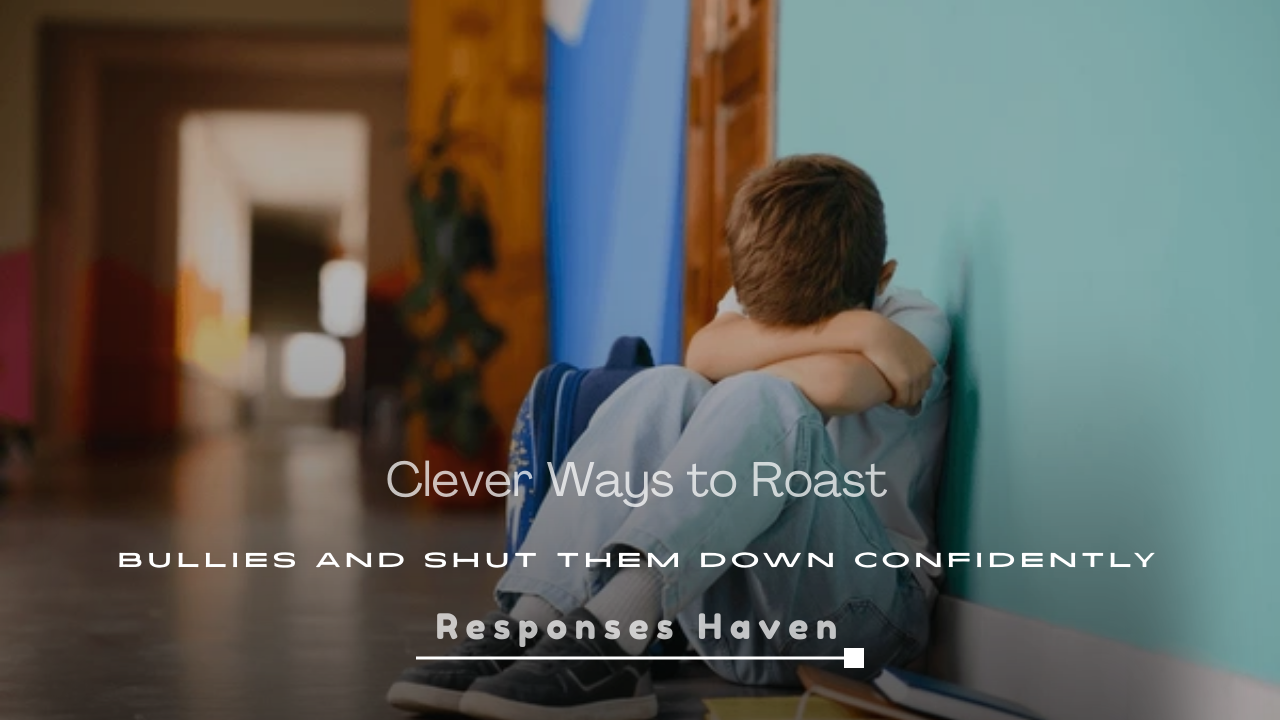
Standing up to a bully doesn’t have to mean yelling, fighting, or crossing lines. The smartest responses are calm, controlled, and rooted in confidence rather than cruelty.
This guide focuses on Clever Ways to Roast bullies that protect your dignity and stop bad behavior.
Check out here for more: 91+ Best Smooth Responses When Someone Asks for Your Number

What Does “Roasting a Bully” Really Mean?
Roasting vs Bullying: Understanding the Difference
Roasting is about responding, not attacking.
It addresses behavior without targeting someone’s identity or vulnerabilities.
Bullying seeks power through harm, while a smart roast removes that power.
Why Roasting Is About Confidence, Not Cruelty
Confidence is what makes a roast effective, not insults.
A calm tone signals that the bully doesn’t control your emotions.
The goal is self-respect, not revenge.
When a Roast Is a Boundary, Not an Attack
A good roast communicates “this behavior won’t work on me.”
It sets limits without escalating conflict.
Boundaries spoken with confidence often end the interaction.
The Goal: Disarming Power, Not Winning Arguments
You don’t need the last word to win.
Disarming a bully means removing their influence over you.
Silence after a strong line can be more powerful than debate.
Why Roasting Can Work Against Bullies
How Bullies Feed on Reactions
Bullies look for emotional responses like anger or embarrassment.
When reactions disappear, their motivation often fades.
Controlled replies interrupt their usual pattern.
Why Humor and Calm Responses Disrupt Them
Humor shifts the dynamic and removes tension.
Calm responses show emotional control.
Both make it harder for a bully to continue.
The Power of Social Awareness and Wit
Witty remarks highlight inappropriate behavior without shouting.
They invite social awareness rather than confrontation.
This often puts the bully on the defensive.
Why Confidence Matters More Than the Roast Itself
Even simple words work when delivered confidently.
Confidence signals self-worth and emotional strength.
It’s the real reason Clever Ways to Roast succeed.
When It’s Okay to Roast a Bully (And When It’s Not)
Situations Where Roasting Can Be Effective
Public teasing or verbal jabs can be deflected with wit.
Repeated low-level comments often stop after a firm response.
Roasting works best when safety isn’t at risk.
When Silence or Reporting Is Smarter
Physical threats or harassment require support, not jokes.
Workplace or school policies exist for a reason.
Your safety always comes first.
Understanding Power Dynamics
A bully with authority needs different handling.
Power imbalance changes what’s appropriate.
Choose strategies that protect you long-term.
Knowing When a Roast Could Escalate Harm
If tension feels unsafe, don’t engage.
Some people escalate when challenged publicly.
Walking away can be the strongest response.
How to Roast a Bully the Smart Way
Stay Calm and Emotionally Detached
Breathe before responding.
Keep your voice steady and relaxed.
Emotionless delivery weakens their impact.
Target Behavior, Not Appearance or Identity
Focus on what they said or did.
Avoid comments about looks, race, or personal history.
Behavior-based roasts feel justified, not cruel.
Keep It Short, Sharp, and Controlled
Long explanations dilute strength.
Short lines land harder and end faster.
Clarity shows confidence.
Let Confidence and Silence Do the Heavy Lifting
Say your line and stop talking.
Silence often creates discomfort for the bully.
You don’t owe further explanation.
Witty and Clever Roasts for Bullies
Calm One-Line Comebacks
Short responses keep control in your hands.
They show awareness without aggression.
Simple confidence beats long insults.
Dry and Deadpan Roasts
Deadpan delivery removes emotional payoff.
It highlights how unnecessary the bullying is.
This style often stops repeat behavior.
Intelligent Wordplay Responses
Wordplay reframes the moment smartly.
It exposes immaturity without name-calling.
Clever phrasing earns respect from others.
Roasts That Expose the Bully’s Insecurity
Pointing out desperation can shift power.
Do it subtly, not cruelly.
Less is always more here.
Funny Roasts for Bullies That Shift the Energy
Light Humor That Deflects
Light jokes keep situations from escalating.
They redirect attention away from insults.
Laughter changes the social tone instantly.
Roasts That Make Others Laugh (Not Cringe)
Avoid cruelty masked as humor.
Shared laughter isolates the bullying behavior.
Social pressure can stop repeat offenses.
Playful Replies That Kill the Tension
Playfulness shows you’re unfazed.
It keeps control without aggression.
Bullies hate losing emotional leverage.
Humor That Makes the Bully Lose Control
When humor lands, bullies often get frustrated.
Frustration signals loss of power.
That’s when they usually back off.
Savage-But-Smart Roasts (That Don’t Cross the Line)
Assertive Comebacks With Boundaries
Assertive doesn’t mean rude.
It clearly states what won’t be tolerated.
Respect comes from firmness.
Confident Call-Outs Without Insults
Calling out behavior is enough.
No need to exaggerate or mock.
Truth spoken calmly carries weight.
Roasts That End the Conversation Immediately
Some lines are designed to close discussion.
They leave no room for follow-ups.
That’s often the goal.
Why Less Words Often Hit Harder
Brevity shows certainty.
Over-talking suggests doubt.
Strong boundaries are usually brief.
Short Roasts for Bullies (Quick Shutdowns)
One-Sentence Roasts
One sentence keeps things clean.
It’s easier to deliver calmly.
It limits escalation.
Calm Replies That Stop the Bully Cold
Calmness removes entertainment value.
It signals emotional maturity.
Bullies often move on.
Minimal Responses That Show Zero Fear
Minimal replies show confidence.
They don’t invite debate.
Fearless energy ends interactions.
When Saying Less Wins More
Silence after a roast is powerful.
It forces reflection.
You stay in control.
How to Roast Different Types of Bullies
Roasts for School Bullies
School settings require extra caution.
Keep roasts clean and behavior-focused.
Seek support if patterns continue.
Roasts for Workplace Bullies
Professional tone is critical at work.
Assertiveness beats sarcasm here.
Document issues when needed.
Roasts for Online and Social Media Bullies
Online bullies crave attention.
Short, calm replies or no reply work best.
Block and report when appropriate.
Roasts for Passive-Aggressive Bullies
Passive aggression thrives on confusion.
Clear, direct responses shut it down.
Politeness with firmness works well.
Roasting a Bully Without Becoming One
Keeping Your Integrity Intact
Your values matter more than a comeback.
Roasts should reflect self-respect.
Integrity builds long-term confidence.
Avoiding Personal or Sensitive Topics
Sensitive topics cause lasting harm.
Avoid them completely.
Behavior is always fair game.
Using Assertiveness Over Humiliation
Humiliation escalates conflict.
Assertiveness sets boundaries.
Respect comes from clarity.
Knowing When to Walk Away Strong
Walking away isn’t weakness.
It’s choosing peace over ego.
That choice shows strength.
Common Mistakes to Avoid When Roasting Bullies
Roasting From Anger Instead of Control
Anger fuels escalation.
Controlled responses protect you.
Pause before speaking.
Over-Explaining or Justifying Yourself
Justifications weaken authority.
You don’t need approval.
Confidence stands alone.
Attacking Identity, Looks, or Trauma
These attacks cause real harm.
They cross ethical lines.
Avoid them completely.
Trying to Win Instead of Protect Yourself
Winning isn’t the goal.
Protection and dignity are.
That mindset changes everything.
What to Do If Roasting Doesn’t Work
When to Use Authority or Reporting Channels
Some situations require formal action.
Use systems designed to protect you.
Documentation is powerful.
Building Allies Instead of Engaging Alone
Support reduces isolation.
Allies shift power dynamics.
You don’t have to face bullies solo.
Strengthening Confidence Beyond Comebacks
Confidence grows from self-trust.
Practice boundaries daily.
Roasts are just one tool.
Protecting Your Mental Health
Your well-being matters most.
Step away when needed.
No response is worth your peace.
Bonus: Ready-to-Use Bully Roast Scenarios
School Hallway Scenarios
Quick, calm replies work best.
Avoid public humiliation.
Seek adult support if needed.
Workplace Meetings or Slack Messages
Professional language is essential.
Stick to facts and boundaries.
Document patterns quietly.
Social Media and Comment Sections
Don’t feed trolls.
Short replies or silence win.
Use block tools freely.
Group Settings Where Bullies Perform
Group bullies want attention.
Calm humor removes their stage.
Social cues do the rest.
Conclusion
Roasting a bully isn’t about being mean, loud, or aggressive.
The most effective responses rely on calm confidence, clarity, and strong boundaries.
When done right, Clever Ways to Roast remove a bully’s power without compromising your integrity.
Your goal is self-respect, safety, and peace of mind—not winning an argument.
Stand tall, speak smartly, and walk away stronger.
FAQs
Is roasting a bully a good idea?
It can be effective when done calmly and safely, especially for verbal teasing.
However, it’s not appropriate in situations involving threats or power imbalance.
What’s the safest way to roast a bully?
Focus on behavior, stay calm, and keep responses short.
Avoid personal attacks and escalate to authorities when needed.
Can roasting make bullying worse?
Yes, if done angrily or publicly in unsafe situations.
That’s why judgment and context matter.
How do you shut down a bully without insulting them?
Use assertive statements and confident tone.
Silence after a clear boundary often works best.
What if roasting doesn’t stop the bully?
Seek support, document incidents, and prioritize your safety.
Roasts are a tool, not the only solution.